
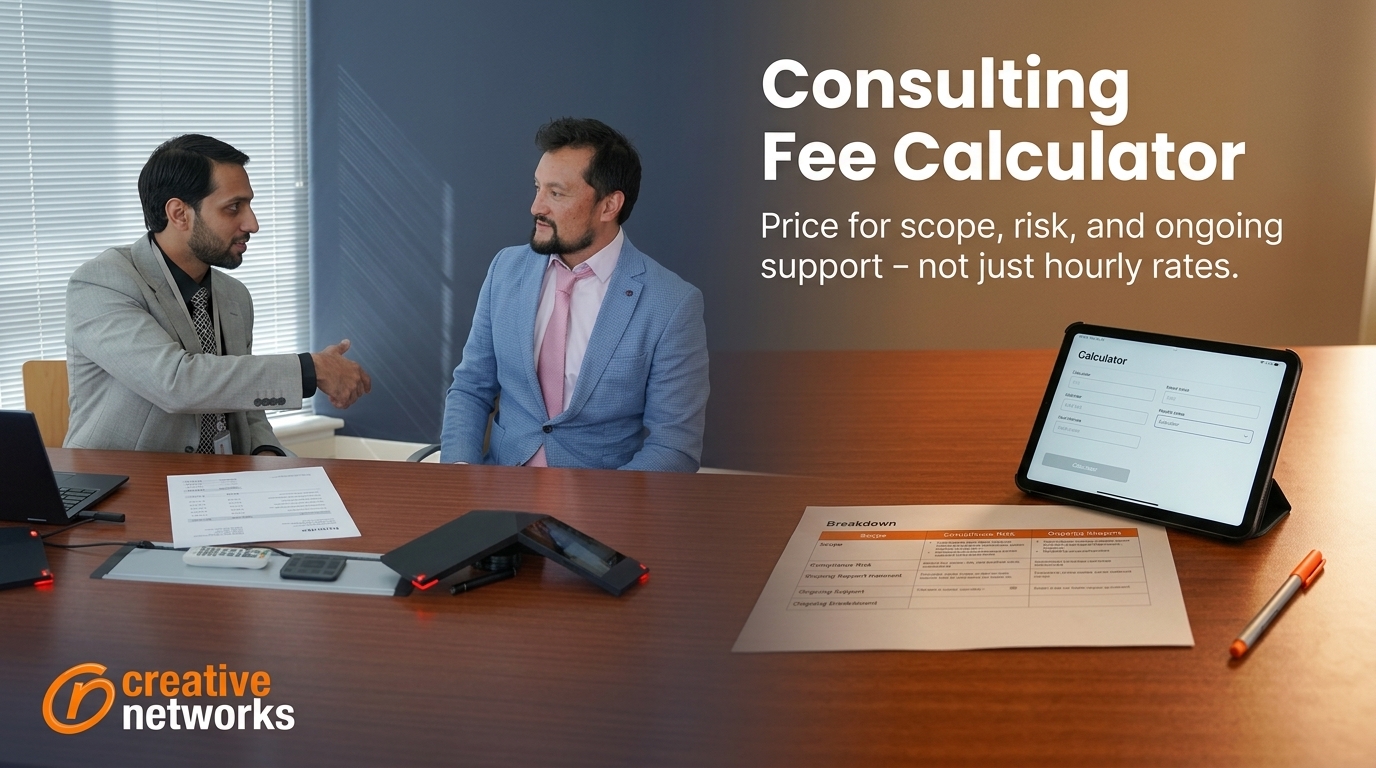
Many businesses treat consultancy pricing like all advice is the same. That’s why budgets spiral and results fall short. A consultancy fee calculator built around scope, risk, and ongoing support cuts through the guesswork. It helps you compare real value—not just hourly rates—so your investment matches the true demands of your project. Get started with a clearer, smarter way to budget for IT consultancy pricing in the UK.
Explore our insights on managed IT services cost and discover how you can benefit from predictable pricing and fewer disruptions. Learn about the day-to-day operations of a managed service provider and how they keep your business running smoothly. Uncover the strategies behind keeping your business stable in the background with the quiet power of managed IT.
Understanding Consultancy Fees
To make the most of your consultancy investment, it’s crucial to understand the key elements that affect pricing. These factors determine whether you’re paying for genuine value or just hours on a clock.
Scope of Change Explained
When considering consultancy fees, the scope of change is a major factor. A project that requires only minor adjustments will generally cost less than one needing a complete overhaul. For example, a small business might need help integrating a new software tool. In contrast, a larger corporation could require a full IT infrastructure upgrade. In both situations, the scope dictates the effort and resources needed, thus impacting the cost.
Complexity and Compliance Risk
The complexity of a project often ties directly to compliance risks. Projects in regulated industries might carry higher fees due to the expertise required. Think about a healthcare provider needing to meet strict GDPR compliance. This involves intricate processes and detailed checks, making it more costly than simpler projects. Complexity drives up consultant time, and higher compliance risks require more thorough oversight.
Importance of Ongoing Support
Ongoing support ensures your investment continues to deliver value. Without it, initial gains from consultancy can quickly fade. Imagine launching a new cloud system. Without continuous support, your team might struggle to use it effectively, leading to wasted resources. Ongoing support keeps your systems running smoothly, adapting to changes as they arise.
Calculating Consultancy Costs

After understanding the factors affecting consultancy fees, knowing how costs are calculated offers transparency and helps ensure that you get value for money.
Base Effort and Multipliers
Consultancy costs often start with a base effort, which then multiplies based on specific project factors. For instance, a standard IT system audit might have a set base fee. However, adding elements like cybersecurity assessments or complex data migrations increases the total cost. By breaking down these elements, you can see exactly where your money goes.
Transparency in Pricing
Transparency in pricing helps you make informed decisions. It’s not just about seeing a number on a quote. Detailed breakdowns show what each part of the project will cost. This clarity can be the difference between feeling confident in your investment and being unsure of where your money is going. A transparent fee structure allows you to adjust your project scope or priorities to better fit your budget.
Managed Services for Continuity
Managed services provide continuity, ensuring your project remains successful long-term. A one-off consultancy might solve a problem now, but managed services keep an eye on ongoing performance. They offer a proactive approach, identifying potential issues before they become real problems. This service can include regular system updates, security checks, and user training sessions.
Making Informed Decisions
Armed with this knowledge, you can make smarter decisions about consultancy services, ensuring you choose the right partner for your needs.
Comparing Fees and Value
When comparing consultancy fees, focus on value, not just price. A cheaper consultant might save you money upfront, but what about long-term benefits? A consultant with a higher fee might offer deeper insights, better solutions, and ongoing support that far outweighs the initial cost. Look beyond the numbers and assess what you’ll actually receive.
Predictable Budgeting Benefits
Predictable budgeting is a key benefit of understanding consultancy pricing. When you know what to expect, you can plan effectively and avoid nasty surprises. This can make a huge difference in project success, ensuring you have the resources needed to complete your goals. Predictable costs also allow you to allocate funds elsewhere, optimizing your entire budget.
Choosing the Right Partner
Choosing the right consultancy partner is crucial. Look for a partner who offers clear, transparent pricing and a commitment to ongoing support. They should understand your specific industry needs and provide a tailored approach. This ensures you receive a service that not only meets but exceeds expectations, driving your business forward.
Frequently Asked Questions
What factors influence consultancy fees?
Consultancy fees are influenced by the scope of change, project complexity, and compliance risks. Additional factors include the need for ongoing support and the specific expertise required for the project.
How can I ensure I’m getting value for money from a consultant?
Ensure value by focusing on transparent pricing structures and comparing the benefits offered. Prioritize consultants that provide ongoing support and have a clear understanding of your industry needs.
Why is ongoing support important in consultancy services?
Ongoing support ensures that your initial investment continues to deliver value. It helps address changes and challenges as they arise, keeping your systems effective and up-to-date.