
Too many businesses treat backup storage as a single, technical choice. The truth is, it’s a business decision tied to resilience, compliance, and cost control. Your backup setup should match your recovery goals, regulatory needs, and budget, whether that means cloud backup for business, on-premises backup, or a hybrid backup strategy. Let’s explore how the right storage model brings confidence and clarity to your backup planning.
Backup Storage as a Strategic Choice
The choice of backup storage isn’t just about technology; it’s a strategic decision that impacts your business resilience and financial planning. Let’s break down the components that guide this choice.
Choosing the Right Model
Selecting the best backup model involves more than picking a storage solution. It’s about aligning your choice with how your business operates. Cloud, on-premises, or hybrid solutions each have different strengths. Cloud backup for business offers flexibility and ease of access, while on-premises backup provides more control. A hybrid backup strategy allows you to balance both. To make the right choice, consider your recovery objectives and how much control you need over data. This approach can significantly affect your business continuity and disaster recovery planning.
Aligning with Compliance Needs
Compliance is a critical factor in backup decisions. GDPR-compliant backups and ISO 27001 backup standards might be necessary for your industry. On-premises solutions often offer more control over compliance. However, cloud providers frequently update their compliance measures, which can benefit businesses needing to remain current with regulations. Choose a solution that ensures your backup system meets all legal requirements, providing peace of mind and protecting sensitive data.
Budget Planning and Cost Control
Budgeting and cost control are crucial when deciding on a backup strategy. While cloud solutions might seem cost-effective initially, ongoing fees can accumulate. On-premises systems require more upfront investment but often offer long-term savings. A hybrid approach can help manage costs effectively by combining the benefits of both. Assess your budget and consider how each model impacts your financial resources over time to ensure sustainability.
Understanding Backup Environments
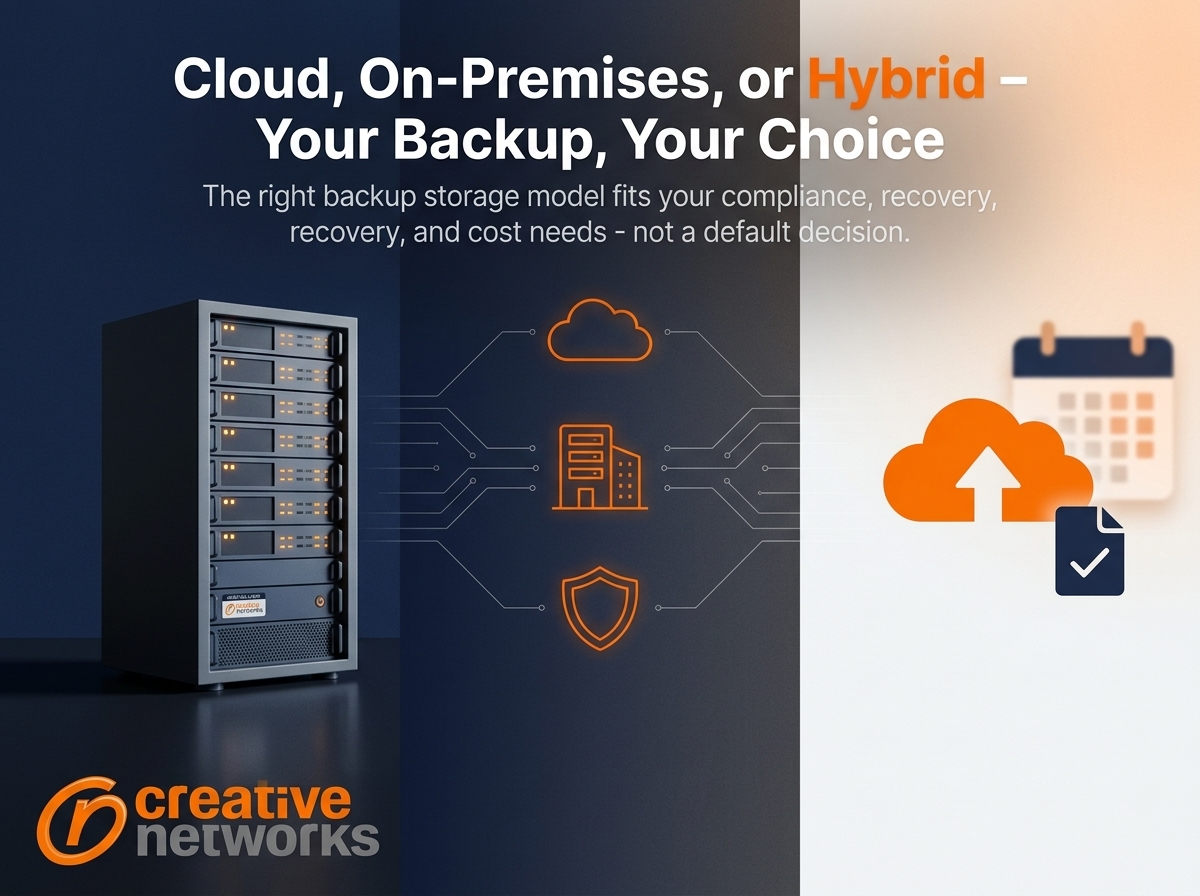
Each backup environment offers unique advantages and fits different business needs. Understanding these can lead to better choices for your company.
Cloud Backup for Business
Cloud backup is designed for flexibility and scale. It’s ideal for businesses that require remote access to data or have fluctuating storage needs. With cloud backup, your data is stored offsite, providing a safeguard against local disasters. Additionally, cloud providers often handle maintenance, easing the burden on your IT team. However, it’s essential to consider data transfer speeds and potential downtime in your decision.
On-Premises Backup Options
On-premises backup allows for complete control over your data. It suits businesses that prioritize security and compliance, as data is stored within your infrastructure. This option can be more secure against cyber threats, as you manage your security protocols directly. However, it requires a significant investment in hardware and maintenance. Evaluate your resources and security needs when considering this option.
Hybrid Backup Strategy Benefits
A hybrid backup strategy provides the best of both worlds. It offers the flexibility of cloud solutions combined with the control of on-premises systems. This approach can enhance recovery options and improve data resilience. By maintaining copies of data both on-site and in the cloud, you create a robust backup environment. This strategy supports business continuity by offering multiple recovery paths and optimizing cost efficiency.
Ensuring Data Resilience and Security
Data resilience and security are paramount in any backup strategy. Let’s explore how to achieve these essential elements.
Compliance-Led Backup Strategies
Compliance-led backup strategies ensure that your data management aligns with industry standards. This approach involves regular audits and updates to maintain compliance with regulations like GDPR. By focusing on compliance, you safeguard your business against legal issues and enhance your reputation. It’s crucial to integrate compliance into your backup planning from the start.
Ransomware Recovery and Immutable Backups
Ransomware threats make data protection more critical than ever. Implementing immutable backups is a powerful way to defend against these threats. These backups cannot be altered or deleted by malicious actors, ensuring your data remains intact. Combine this with a ransomware recovery plan to minimize downtime and recovery time objectives (RTO). A proactive approach to security can protect your business from significant losses.
Backup Monitoring and Testing Essentials
Monitoring and testing are vital to ensuring your backups are reliable. Regular backup monitoring helps identify issues before they escalate. Testing ensures that your recovery processes work as expected when needed. This practice not only guarantees data integrity but also builds confidence in your disaster recovery plan. Make backup monitoring and testing a regular part of your IT operations to maintain data security and business continuity.
Frequently Asked Questions
What is the best backup strategy for my business?
The best backup strategy depends on your business needs, including compliance, data control, and budget. Consider cloud, on-premises, or hybrid solutions based on your specific requirements.
How does compliance affect backup choices?
Compliance impacts backup choices by dictating how data should be stored and protected. Choosing a solution aligned with regulations like GDPR ensures legal compliance and data security.
What are the cost implications of different backup models?
Cloud solutions often have lower initial costs but higher ongoing fees. On-premises require upfront investment but can be cost-effective long-term. Hybrid solutions balance both, optimizing cost efficiency over time.