
With two main options available—PBX phone systems and VoIP solutions—businesses must carefully weigh the pros and cons of each to make an informed decision. While PBX offers traditional reliability, VoIP brings flexibility and cost-efficiency.
This guide by Creative Networks explores the difference between PBX vs VOIP phone systems , benefits, and factors to consider when choosing between the two, ensuring your decision aligns with your business goals.
What is a PBX Phone System?
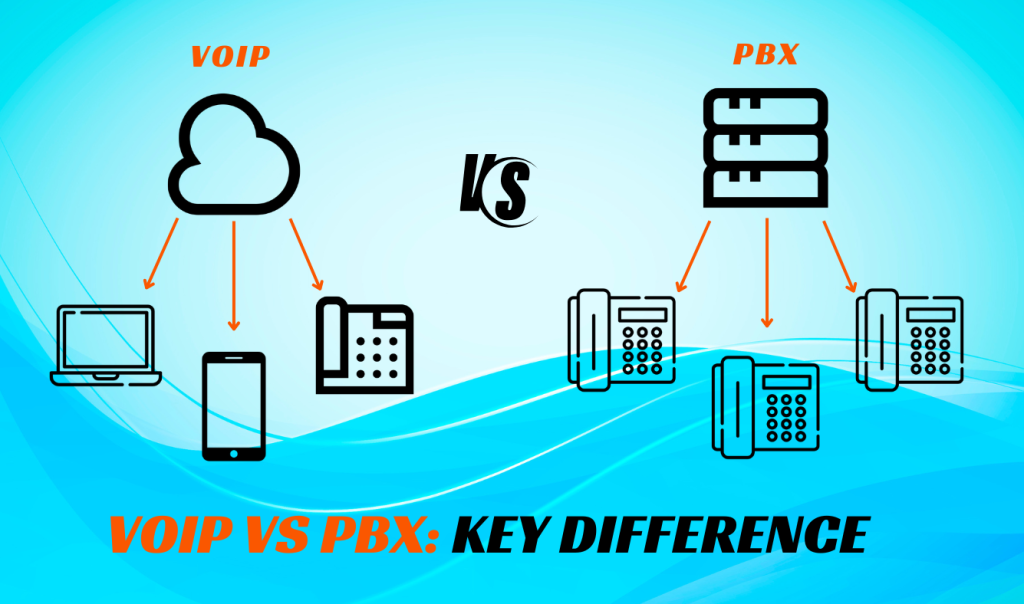
A Private Branch Exchange (PBX) is a traditional telephone system designed to manage internal and external business calls. PBX systems connect phone lines to internal extensions and include advanced features like call routing, voicemail, and auto-attendants.
Types of PBX Systems:
- Traditional PBX:
- Operates via physical hardware installed on-site.
- Uses analog or ISDN phone lines for connectivity.
- Best suited for businesses with a fixed location and dedicated IT resources.
- Hosted PBX:
- A cloud-based version of PBX, managed by a third-party provider.
- Eliminates the need for physical infrastructure while offering remote management.
- Ideal for businesses looking for scalability without high upfront costs.
What is VoIP?
Voice over Internet Protocol (VoIP) is a modern communication technology that transmits voice data over the internet instead of traditional phone lines. VoIP systems are popular for their flexibility, scalability, and affordability.
How VoIP Works:
VoIP converts analog voice signals into digital data, which is transmitted via the internet. With hardware such as softphones
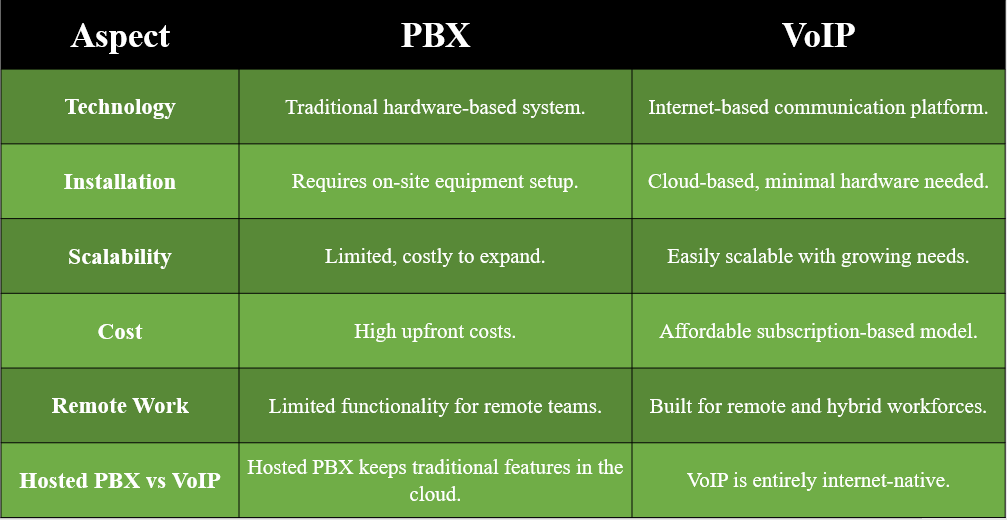
Key Differences Between PBX and VoIP
Benefits of PBX Systems
- Reliable Connectivity: PBX systems operate independently of internet connectivity, ensuring consistent call quality.
- Closed Network Security: As PBX systems are isolated from the internet, they are less vulnerable to cyberattacks.
- Legacy Features: Ideal for businesses with established telephony systems that require robust in-office communication.
Limitations of PBX:
- High upfront investment in hardware and maintenance.
- Limited flexibility for remote or hybrid teams.
- Difficult to scale or integrate with modern collaboration tools.
Benefits of VoIP
- Flexibility and Mobility: VoIP allows employees to make and receive calls from any device, anywhere with an internet connection.
- Cost Efficiency: No need for physical hardware or phone lines; VoIP systems reduce operational costs with affordable subscription plans.
- Advanced Features: Offers integrations with CRM tools, video conferencing, call recording, and real-time analytics.
Limitations of VoIP:
- Dependent on internet reliability; poor connectivity can impact call quality.
- May require additional investment in internet bandwidth for optimal performance.
Factors to Consider When Choosing PBX vs VoIP
- Business Size and Needs:
- Small to medium businesses benefit more from VoIP’s affordability and scalability.
- Larger organizations with complex telephony needs may prefer PBX.
- Budget:
- VoIP offers cost savings with its subscription-based model.
- PBX requires significant upfront investment but may offer long-term savings for certain setups.
- Remote Work Capabilities:
- VoIP is inherently designed for mobility and remote work, making it ideal for distributed teams.
- PBX systems are less equipped for supporting employees outside the office.
- Security:
- PBX provides a closed network, reducing exposure to cyber risks.
- VoIP systems rely on encryption and firewalls but may require more robust cybersecurity measures.
- Integration Needs:
- VoIP integrates seamlessly with modern tools like CRMs and project management platforms.
- PBX systems may require additional configurations to achieve similar functionality.
How to Choose: PBX phone system vs VoIP
Evaluate Business Needs:
- If your business operates primarily in one location with consistent hardware resources, PBX might be the better choice.
- For remote teams or businesses looking for flexibility, VoIP is the way forward.
Consider Costs:
- PBX involves higher upfront costs but lower long-term internet reliance.
- VoIP reduces initial investments, but businesses need reliable internet bandwidth to ensure smooth operation.
Think About Scalability:
- Growing businesses benefit more from VoIP’s easy scalability.
- PBX expansion can be expensive and limited by hardware constraints.
Integration Needs:
- VoIP’s compatibility with CRM tools and analytics platforms makes it ideal for tech-driven organizations.
VoIP Gateway vs PBX: A Transition Option
Businesses transitioning from traditional PBX to VoIP can use a VoIP gateway. This device allows existing PBX systems to connect to VoIP services, enabling organizations to retain their current infrastructure while adopting modern communication technology.
Future Trends: Hosted VoIP vs. Hosted PBX
As businesses shift toward hybrid work environments, hosted VoIP solutions are gaining popularity due to their adaptability, affordability, and minimal infrastructure needs. On the other hand, hosted PBX systems still appeal to organizations with legacy setups that require continuity in traditional telephony but with reduced on-site maintenance.
Contact Creative Networks Today
The decision between PBX vs. VoIP boils down to your organization’s size, goals, and flexibility requirements. While PBX offers stability and security for traditional setups, VoIP caters to modern businesses with remote capabilities and scalable solutions.
At Creative Networks, we specialize in helping businesses choose and implement the ideal phone system tailored to their needs. Whether you’re considering hosted PBX vs. VoIP or exploring the advantages of VoIP vs PBX , we’ve got you covered.
Contact us today to elevate your communication infrastructure and keep your business connected!