
Cybersecurity threats are no longer limited to sophisticated hacking techniques or malware attacks. Instead, attackers increasingly rely on Social Engineering—a deceptive strategy that manipulates individuals into revealing confidential information or granting unauthorized access. Unlike traditional cyberattacks that exploit software vulnerabilities, social engineering targets the human factor, exploiting trust, urgency, and curiosity to bypass security defenses.
Social engineering in Cyber security attacks can have devastating consequences, leading to financial loss, data breaches, identity theft, and reputational damage. Understanding these tactics, real-world examples, and best practices for prevention is essential for businesses and individuals to stay protected.

What is Social Engineering?
Social engineering refers to the psychological manipulation of individuals to extract sensitive information, such as login credentials, financial details, or corporate data. Attackers deceive victims into believing they are interacting with a trustworthy source, making them more likely to comply with malicious requests.
Unlike brute-force hacking or malware-based exploits, social engineering does not require sophisticated technical skills. Instead, it relies on human psychology, making it an effective yet dangerous cybersecurity threat.
Common Social Engineering Techniques
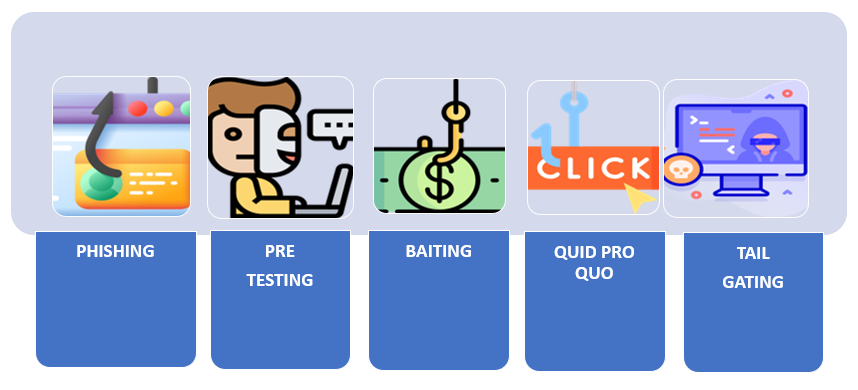
Social engineering attacks take various forms, with perpetrators using different approaches to deceive victims. Some of the most common tactics include:
1. Phishing – The Most Widespread Social Engineering Attack
Phishing involves fraudulent emails, messages, or websites designed to impersonate legitimate entities. The goal is to trick users into clicking malicious links, downloading infected attachments, or entering personal data into fake forms.
Example: A fraudulent email that appears to be from a bank, urging the recipient to reset their password due to suspicious activity. Clicking the link leads to a fake banking website where login credentials are stolen.
How to prevent it: Verify sender email addresses, avoid clicking on unsolicited links, and enable multi-factor authentication (MFA) to add an extra layer of security.
2. Pretexting – Crafting a False Scenario to Gain Trust
Pretexting involves an attacker creating a fabricated situation to manipulate victims into providing sensitive information. The attacker often impersonates authorities, IT support personnel, or colleagues to gain trust.
Example: A scammer posing as an IT technician calls an employee, claiming to need their password to fix a system issue. The employee, believing the request is legitimate, provides their credentials, giving the attacker access to sensitive company data.
How to prevent it: Always verify identities before sharing personal or work-related information. Legitimate IT personnel will never ask for your password.
3. Baiting – Luring Victims with Enticing Offers
Baiting attacks tempt victims with something desirable, such as free downloads, job offers, or exclusive deals, but instead deliver malware or data theft.
Example: A victim finds a USB drive labeled “Company Confidential” in their office parking lot. Curious, they insert it into their computer, unknowingly installing malware that compromises their network.
How to prevent it: Never use unknown USB devices or download unverified files. Ensure cybersecurity policies prohibit employees from using external media on company systems.
4. Quid Pro Quo – Exchanging Information for Fake Assistance
Quid pro quo attacks involve an attacker offering something beneficial, such as free software, technical assistance, or job opportunities, in exchange for sensitive information.
Example: An attacker posing as a software vendor calls an employee, offering a free trial of premium antivirus software. To “activate” the service, the employee provides login credentials, granting the attacker access to the system.
How to prevent it: Be cautious of unsolicited offers, especially those that require sharing sensitive details. Verify vendors through official channels.
5. Tailgating – Gaining Unauthorized Physical Access
Tailgating occurs when an attacker physically follows an authorized person into a restricted area, bypassing security measures. This is common in office buildings and data centers.
Example: An attacker dressed as a delivery person waits near an office entrance. An employee opens the door and holds it for them, granting unauthorized access to a secure facility.
How to prevent it: Implement strict access control policies with ID verification and security awareness training to prevent unauthorized entry.
Real-World Examples of Social Engineering Attacks
- The Twitter Bitcoin Scam (2020): Hackers used social engineering tactics to convince Twitter employees to share their credentials, allowing them to hijack high-profile accounts and promote a Bitcoin scam. The breach resulted in significant financial losses and reputational damage.
- Target Data Breach (2013): Cybercriminals infiltrated Target’s payment system by phishing a third-party vendor, stealing 40 million credit card records. This incident highlighted the dangers of supply chain vulnerabilities.
- Google & Facebook Fraud (2013-2015): Attackers impersonated a legitimate hardware supplier, tricking Google and Facebook employees into wiring over $100 million to fraudulent accounts.
How to Prevent Social Engineering Attacks
While technology plays a crucial role in cybersecurity, human awareness is the most effective defense against social engineering. Organisations must implement Cyber security best practices to reduce their exposure to these threats.
1. Employee Training & Security Awareness
Security awareness training is essential for recognizing and responding to social engineering attempts. Employees should be taught to:
- Identify phishing emails and scam messages.
- Verify the authenticity of requests before providing information.
- Report suspicious activity to IT security teams immediately.
2. Multi-Factor Authentication (MFA)
MFA enhances security by requiring an additional verification step (such as a one-time code sent to a mobile device) before granting access to accounts. Even if an attacker steals a password, they cannot log in without the second authentication factor.
3. Email Security Measures
Organizations should use email authentication protocols such as SPF, DKIM, and DMARC to block phishing attempts. Additionally, spam filters should be enabled to detect and quarantine malicious emails.
4. Implement Zero Trust Security Framework
The Zero Trust model operates under the assumption that no user or device should be automatically trusted. It enforces continuous verification and restricts access based on predefined policies.
5. Endpoint Security Solutions
Deploying Advanced Endpoint Security Solutions and Software can help detect and block malware, ransomware, and unauthorized access attempts. Organizations should also monitor network activity for signs of social engineering attacks.
6. Strict Access Controls
Organizations must implement role-based access control (RBAC), ensuring that employees only have access to the information and systems necessary for their job roles. This minimizes the risk of insider threats and unauthorized data exposure.
Final Thoughts: Stay Vigilant Against Social Engineering
Social engineering attacks exploit human vulnerabilities, making them one of the most dangerous cybersecurity threats today. By understanding common attack techniques, real-world case studies, and prevention strategies, individuals and businesses can significantly reduce their risk of falling victim to these deceptive tactics.
Organizations must prioritize security awareness training, robust authentication measures, and proactive security policies to defend against social engineering threats effectively.
Contact Creative Networks Today
At Creative Networks, we help businesses strengthen their Cybersecurity posture through tailored solutions designed to mitigate social engineering risks.
Our services include:
- Employee security training to prevent phishing and impersonation attacks.
- Advanced threat detection systems to safeguard sensitive data.
- Zero Trust security frameworks for comprehensive access control.
- Proactive incident response planning to minimize the impact of security breaches.
Contact Creative Networks today to protect your business from evolving cyber threats and ensure a safer digital environment for your organization.